

The Need to Wonder
Now more than ever, we need to retain this capacity.

It was the winter of 2024 when I started a writing course titled “Wonder & Write.” I had been thinking about how to re-experience the joy of wonder, of the surprise discoveries that we made so effortlessly when we were younger—finding a cookie in the shape of a cloud, a story behind a lost shoe on the sidewalk. I wanted to open a space to discuss and explore the art of imagining and with it the art of questioning which how the course came to be.
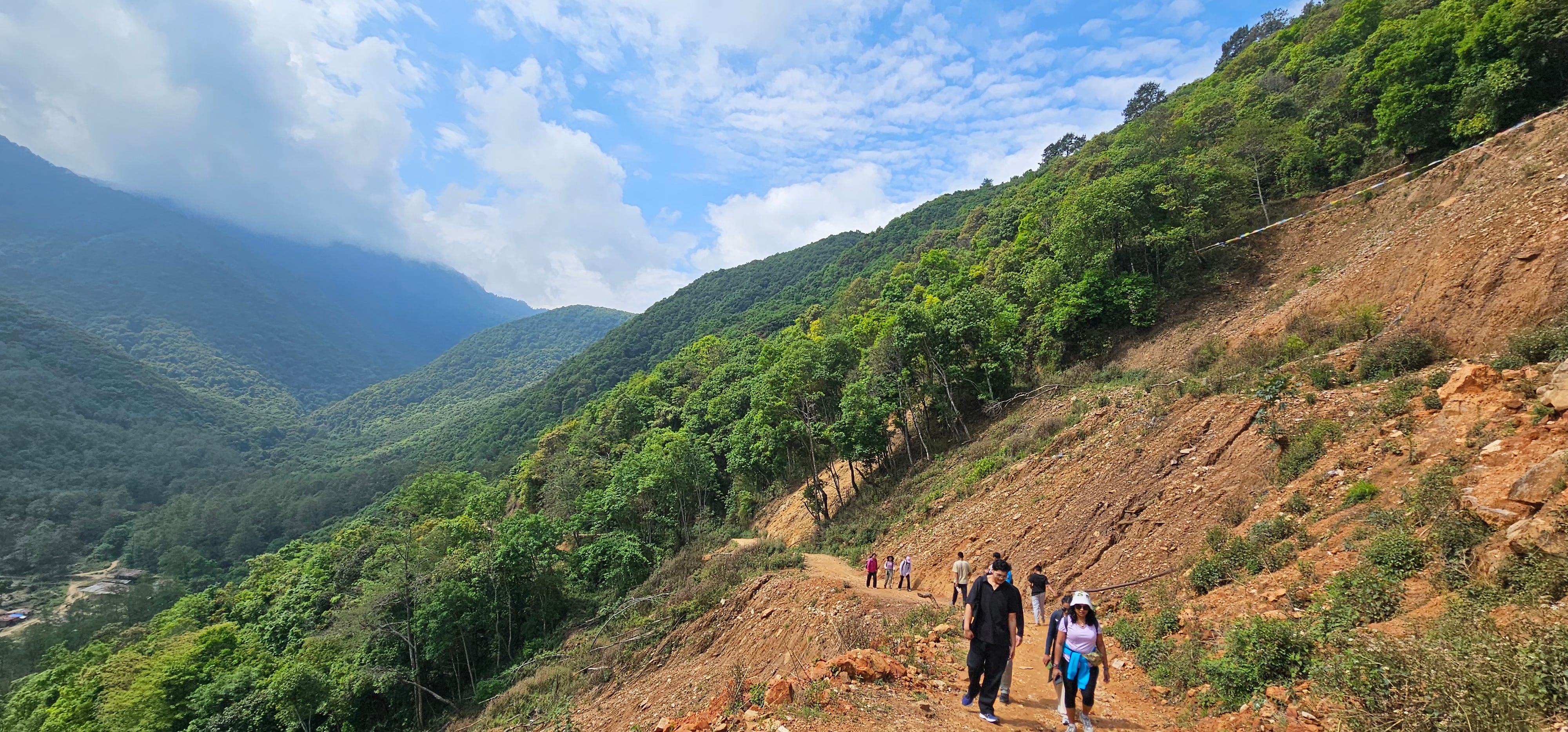
Wonder Walk—walking around to observe the world and ‘seeing’ became a part of the course. The name “Wonder Walk” was given by a fellow participant, and it stuck a chord. During the second edition of the writing course, we took a group tour around Patan and that was probably when the desire to open it to public as a separate activity emerged. A sense of wonder is how this podcast came to be and a sense of wonder is what has kept all the creatives who have joined us on-going in their practice. Thus, an exploration of wonder seemed apt for us. This is how the collaboration with Duluwa Outdoors, a women led initiative that organizes outdoor activities began. We decided on a combination of hiking and writing—there could not have a been a better duo. After having to postpone the first scheduled Wonder Walk in the fall of 2025, we were finally able to make it happen on May 2, 2026. We hiked up the top of Marble Dada in Godavari, and sat down to write, reflect, and share. Shanti Rai was our hike lead while I facilitated the writing elements. We also had Pal provide us with their reflective journals.
“What is wonder?” This question is always an interesting point to begin from. We all know what wonder is, we have all experienced it in some capacity, and yet we are almost always skeptical if we might be able to experience it again or sometimes if we should experience it again. One of my favorite definitions of wonder comes from Jan B.W. Pedersen’s essay The Importance of Wonder in Human Flourishing. Pedersen writes, “We wonder as it were at what we cannot fully grasp,” which is based on philosopher Francis Bacon’s definition of wonder, “Wonder is broken knowledge.” Wonder then is a gap, a state of not knowing, a state of questioning, a state of suspension between what seems and what is/can be/might be.
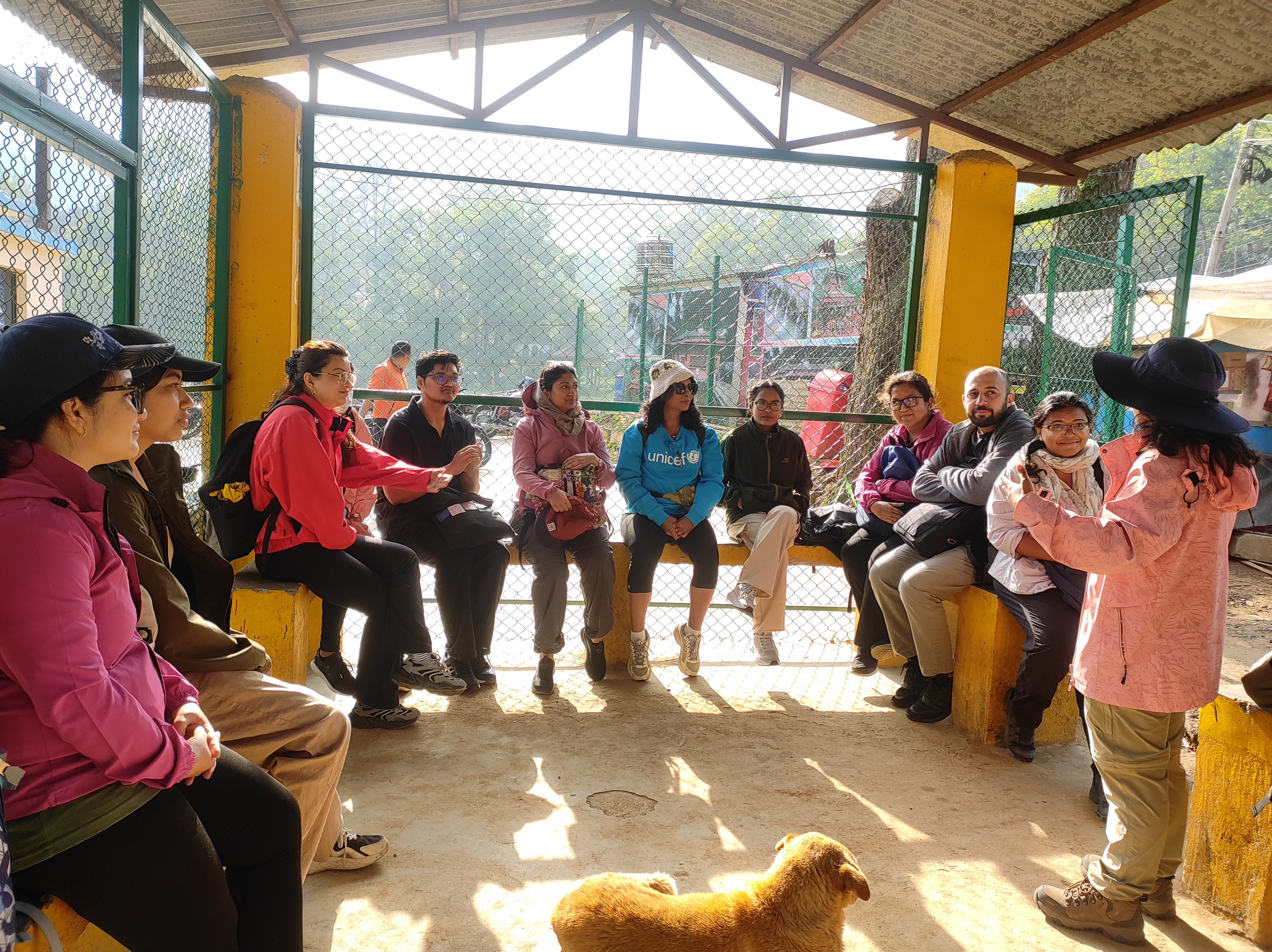
Our participants shared that wonder for them is to discover nature, to be with people, and to reflect. Surrounded by trees and leaves, it was only plausible that wonder’s connection with nature would be the most evident answer. But wonder has functions beyond being a retreat or an escape. Genevieve Lloyd’s book Reclaiming Wonder explores how wonder can be an intellectual engagement with reality. She writes, “We can wonder at everyday things, as well as being amazed by the strange and exotic. Wonder can also have political significance; it can shake us into a fresh perception of what is at stake in cultural assumptions and expectations that we have come to regard as normal.”
We have probably not thought of wonder as a socio-political or socio-cultural tool, but as Lloyd argues, it can be one. One of wonder’s abilities is to turn the familiar into unfamiliar and the unfamiliar into familiar. As I learnt that we had participants from outside Nepal—from India, Bangladesh, Sri Lanka, and Iraq, I was curious to see what they might have seen in Kathmandu that I might have missed. That is also how wonder functions, through conversations and questions that our everyday eye might not notice. During our uphill walk, I asked them what was something surprising they have seen during their time here. The street dogs, spirituality, and the mountains were some answers they shared. “I was at first scared of the dogs, but learnt that they have been living together with humans. That was beautiful,” one of them said. Locals here might also tell about the terror of dogs in packs at night. These are, I believe, a way paradoxes can co-exist together, something wonder urges us to explore and sit with.
When we reached the top of Marble Dada, we realized, very hilariously, that we were short of pens and pencils to write. “How did we show up in a writing workshop without pens?” someone asked and we had a good laugh. This was perhaps already our starting point to wonder. As we borrowed pens from each other like seventh graders in a classroom, one of our participants exclaimed, “This is the first time I’m touching a pen in months!” He shared that he’s so used to typing on the computer and working on his work reports, that he has not taken the time to pick up an actual pen and write.
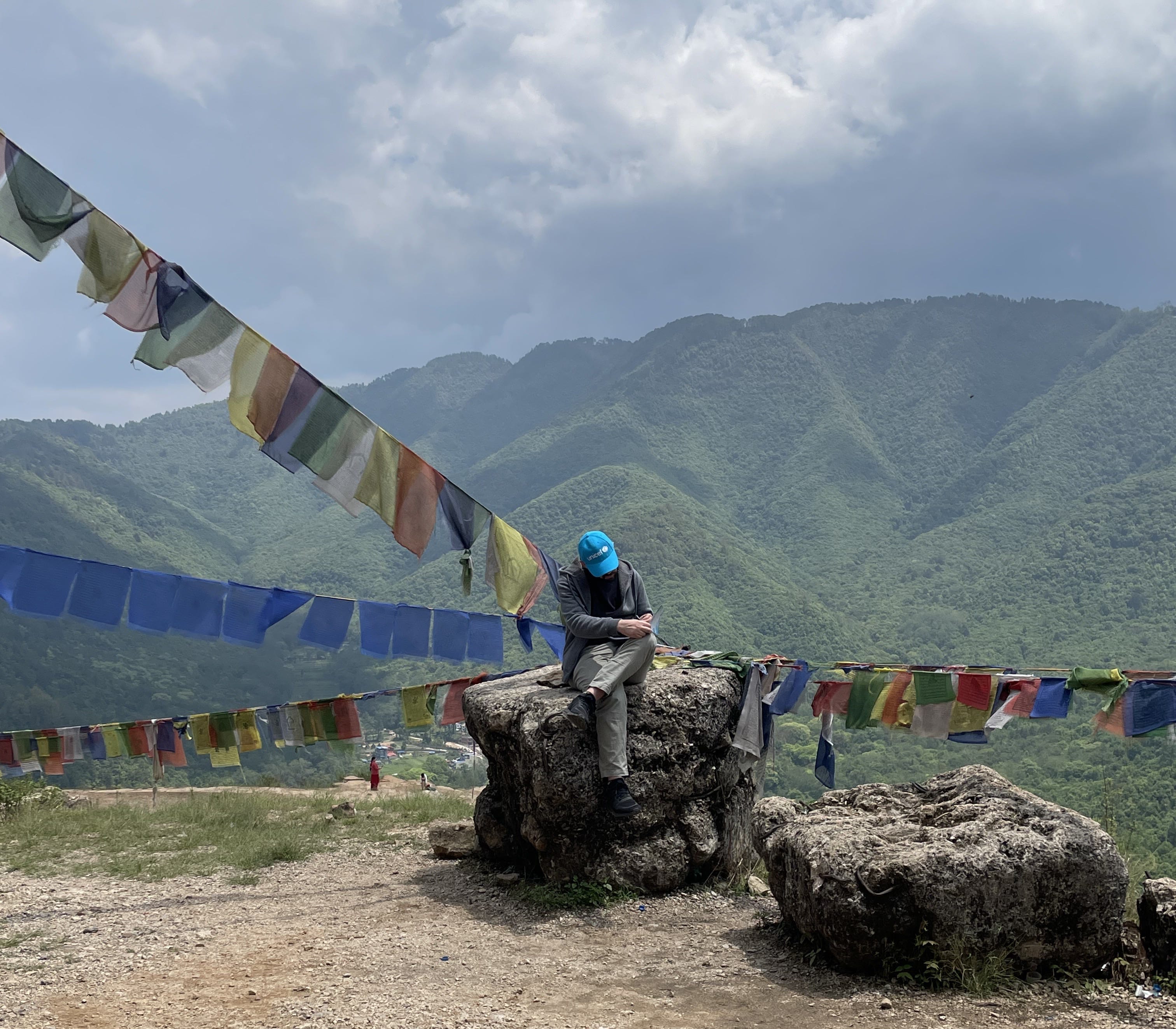
When I announced that the first activity of the day would be five minutes of free writing, a participant remarked with a grin, “Free writing in the age of AI.” Every class I step into, be it as a student or as an instructor, the talk on AI has become ubiquitous. These small anecdotes from that Saturday morning is an everyday reflection of how technology has pervaded our lives. I am not against tech, I am not against the multitude of blessings technology has rewarded our lives with. But I am also more cautious.
Not writing with a pen, not taking or having the time to write without tech support might not seem like big incidents, but add it up over years and it could point to a serious issue—the outsourcing of thinking. But one might argue, we use calculators to do math, excel sheets to organize our finances, then why not AI? The danger lies in the gaping divide that AI can create that these previous technologies did not. In an article for Time, Tharin Pillay quotes Evan Risko, professor at the University of Waterloo, “[AI is] starting to creep into the things we thought were cognitively ours.” Which is why protecting our sense of wonder is paramount. We must think, we must wonder about our world and the structures in it.
The famous Greek philosopher Plato believed that an ideal form [of anything] existed, and if, for example, a carpenter made a chair, it would be a “mimesis” (an imitation) of the ideal chair. Then, if a poet wrote about that chair, it would be a further imitation twice removed from the ideal—which is why he wanted to banish imitative poetry and poets. The banishing of poets is a discussion for another day, for now I'd like to focus on Plato’s argument about the removal from the ideal (or the reality) and look at technology with the same lens. Technology has the capacity to work like “mimesis.” When we begin to become highly dependent on technologies like the ones working inside our phones, we are at the risk of being further and further removed from the real world. Algorithms are notorious for creating “eco-chambers.”
It might now seem like we are against a formidable challenge. And it is indeed a formidable one. When the world’s best minds are after our minds, we might feel like the lone King waiting for a checkmate. But all cannot be lost. Our capacity to wonder will prove crucial in (re)connecting with our world. But the art of wondering is not as simple and easy as it might sometimes seem, precisely because we have become highly dependent on tools that provide us with structured answers.
One of the participants shared that she wasn’t used to writing without an agenda. She always had a “list” of things she needed to write about. Wonder, unlike her list, is not neat. Lloyd writes of Socrates’ teaching, “… it is not meant to lead to definitive conclusions. The aim is to teach … a kind of thinking which originates in perplexity.” Wonder works similarly and the capacity to sit still with unclear paths and unclear questions is part of the process. As the world around us undergoes upheavals, our capacity to wonder will prove immensely important. Wonder is a socio-cultural, socio-political, and socio-economical instrument. We must protect it, retain it, and nurture it. It can begin with something really small. It can start with a walk, a book, a pause.
I would like to leave you with an excerpt from Janice Pariat’s novel Everything The Light Touches. Janice joined us back in the second season for a conversation filled with wonder and charm.
‘To strive, to seek, to find, dear Evie,’ her grandma would sing, ‘and never to yield.’
‘Never to yield to what?’ she would ask.
A smile, an arched brow. ‘A life bereft of wonder.’
- Janice Pariat, Everything The Light Touches
It was such a pleasure experiencing nature and the place not just through walking, but also through expression and writing with you. You made the entire experience feel engaging, meaningful, and effortless. Thank you !